Roadmap
We structured the product journey into three long-term phases:

Phase 3 : Usability & Experience Enhancement
Phase 1 : AI Foundation & Validation
Phase 2 : Business Alignment & Personalization
How do we deliver the most value fast?
Low familiarity with AI among users
Fear of using it “wrong”
Complexity of multi-system data integration
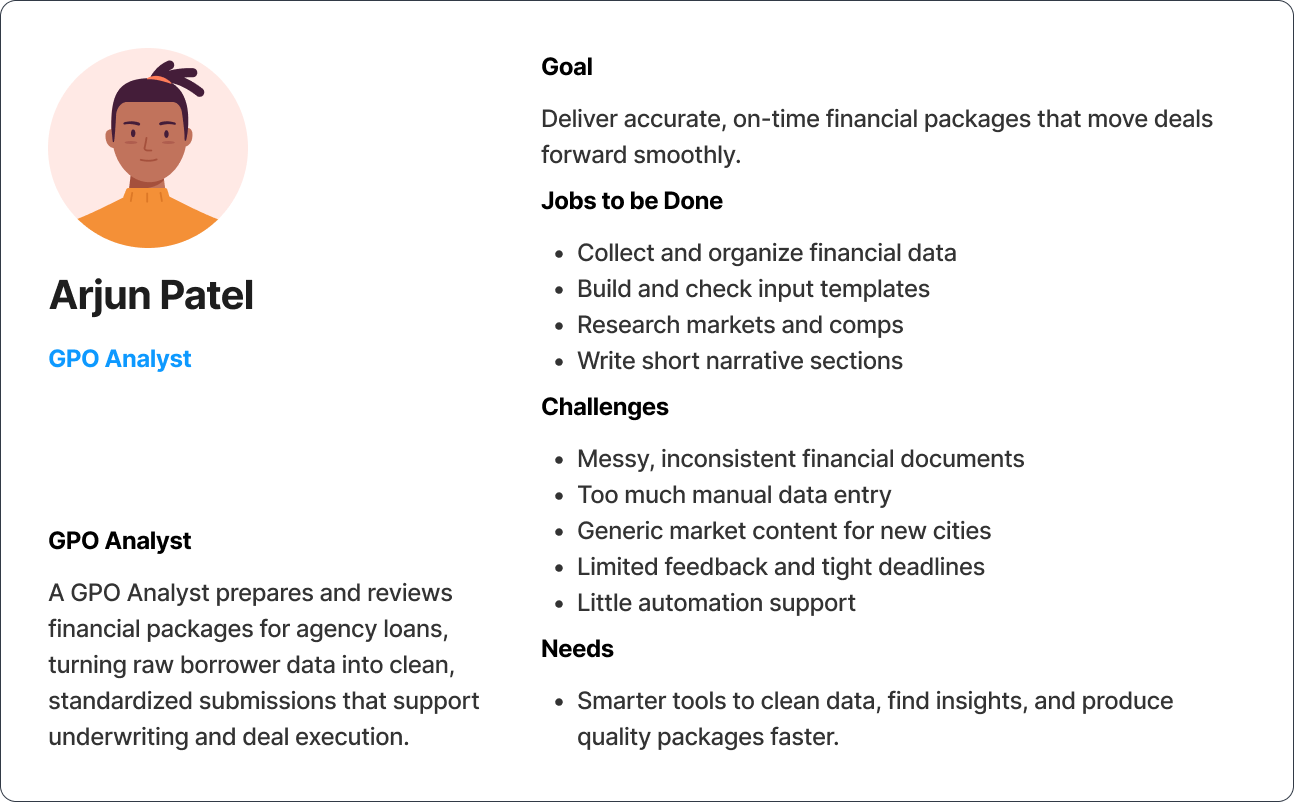
Before designing solutions, I created a persona to capture the real challenges and motivations of our core user — the GPO(Global Production Operations) Analyst. This helped the team empathize with their daily workflow and pain points.
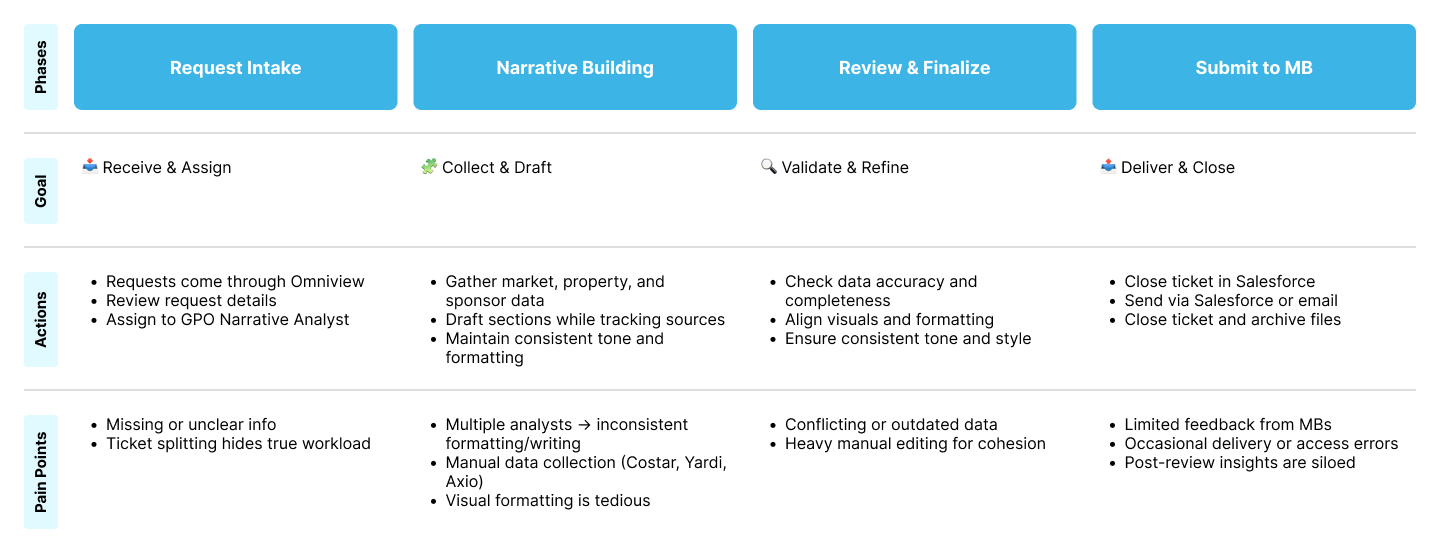
To understand how narratives are created from start to finish, I mapped the full GPO workflow. This revealed where time was lost and where automation could make the biggest impact.
Pain 1: Users reported that retrieving simple research data takes too long, particularly in investment sales and mortgage banking, where quick access to data from sources like Costar, Yardi, RCA, and MSA is crucial.
We conducted interviews with 20 users to identify the primary business pain points.
Pain 2: The creation of marketing and loan documents for property listings, including social media content, marketing materials, BOVs, OMs, and underwriting narratives, is also a significant burden.
Pain 3: Users generally lack of trust of AI technology, leading to uncertainty about its applications and fear of misuse.
1. Reduce manual data entry with AI-assisted automation
2. Improve collaboration and narrative consistency
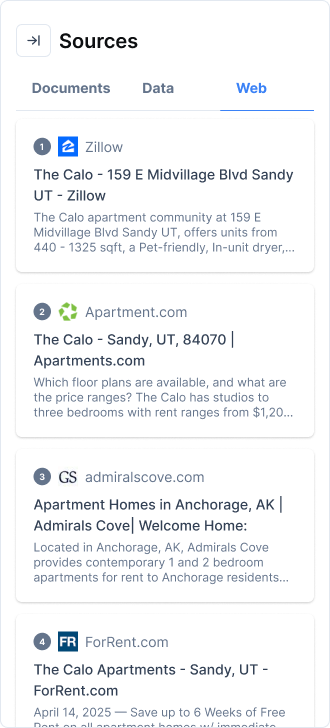
3. Build trust through data traceability and transparency
Unified input form where analysts can ask AI for data and auto-populate templates.Predictive text and prefilled fields reduce manual lookup time.
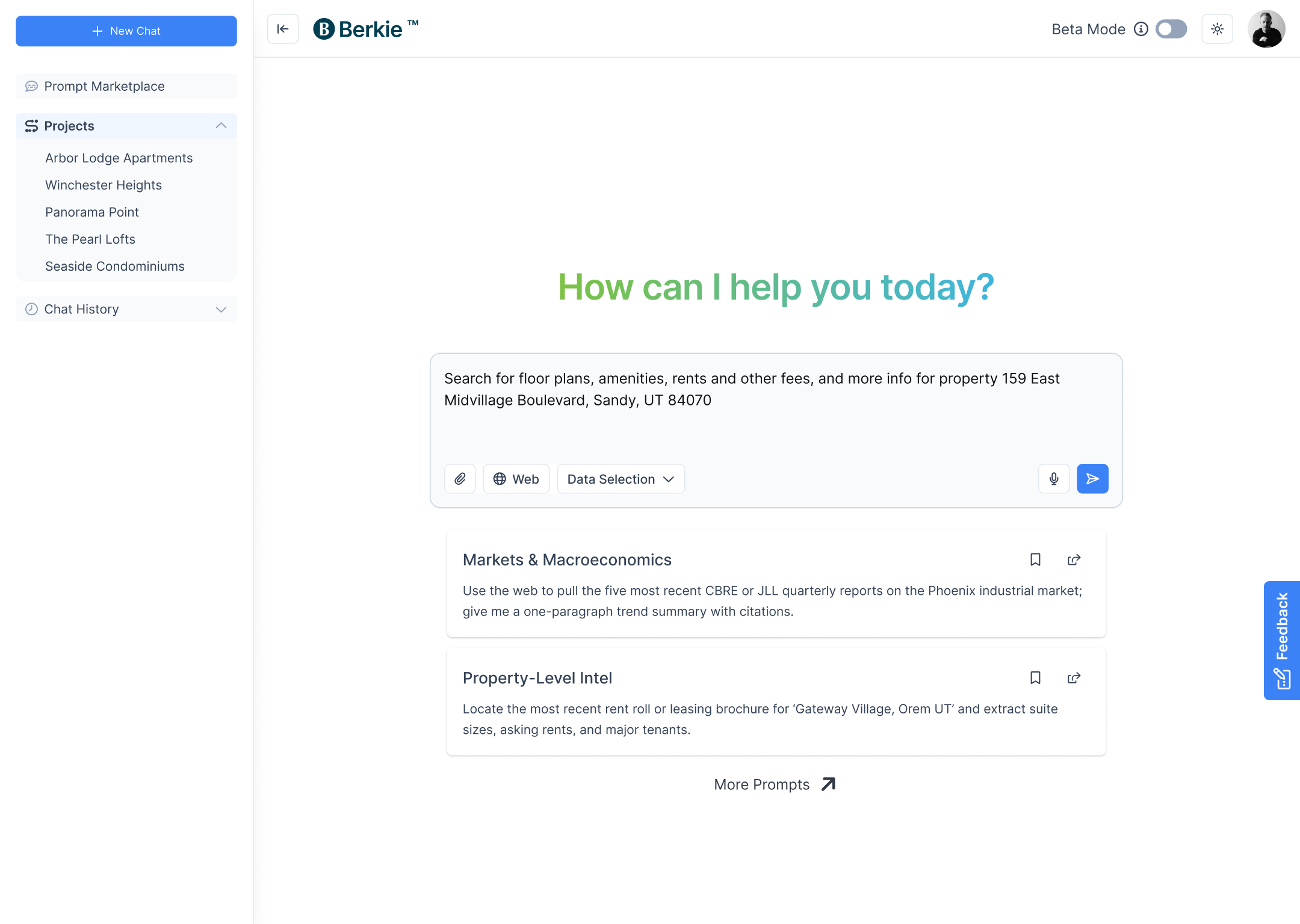
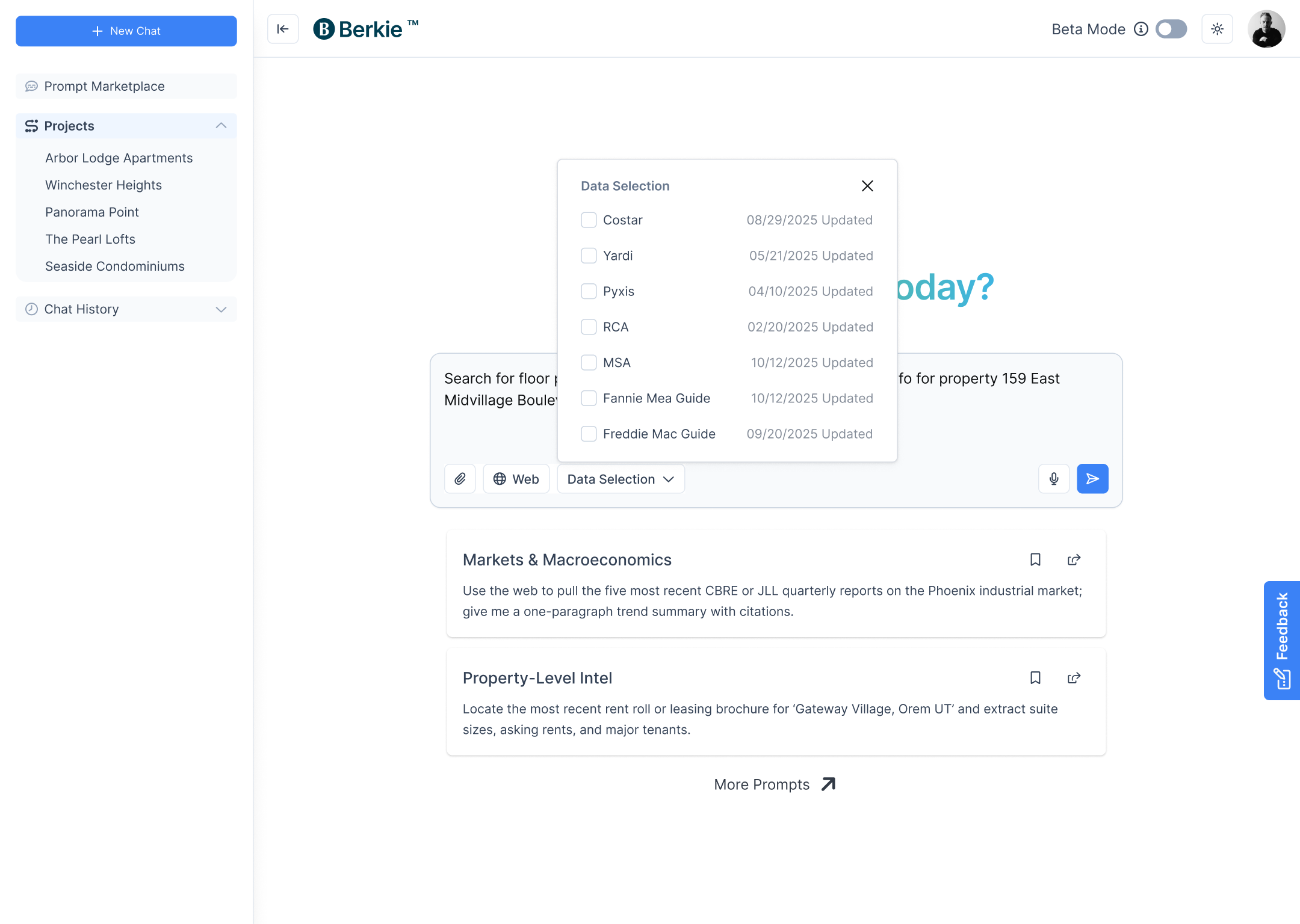
Collaborative workspace for multiple analysts to co-author narratives. Real-time editing, tone guidance, and linked data sources keep everything consistent.

Every insight links back to verified data and assumptions.Users can cross-check sources instantly, improving trust and compliance.


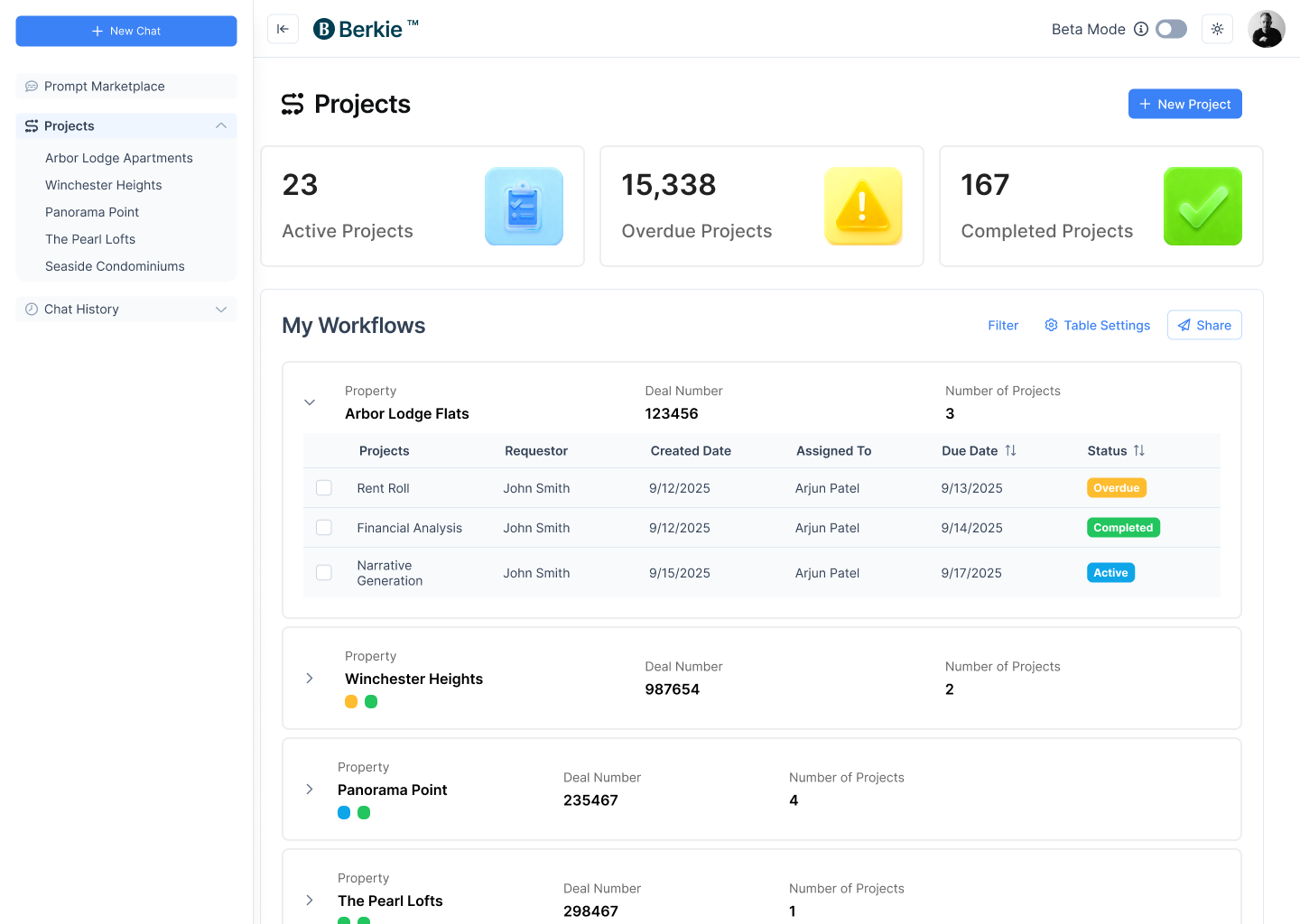
To support less tech-savvy users in getting the most out of Berkie, we built a robust prompt library featuring examples across different business areas. It encourages users to interact, experiment, and learn by doing, ultimately boosting engagement and laying the foundation for a future best-practice business community.
After launching the prompt library, we received strong positive feedback along with high user engagement. We also gathered valuable constructive feedback, including:
1. Some users expressed interest in sharing their best prompts with team members to help establish consistent standards in their workflows. For example, the underwriting team wanted to share preferred formats and guides to improve efficiency across their group.
2. As the prompt library grew, users found it increasingly difficult to locate prompts relevant to their specific needs, such as their department, role, or tasks. During team discussions, we realized that while a fully personalized solution would be ideal in the long term, a quicker and more practical improvement would be to add a search function to the prompt library. This would allow users to easily find prompts related to key tasks and topics of interest.





Through continuous user feedback and workflow analysis, we uncovered a critical need for deeper research capabilities within Berkie. Commercial real estate (CRE) professionals—especially underwriting teams—often rely on highly detailed, specific data to support investment decisions, underwriting, and client advisories. Existing tools offered surface-level insights but lacked the depth and flexibility needed for more complex tasks, particularly in document discrepancy analysis and property underwriting summaries. To close this gap, we designed and built an deep-research function that enables users to dive deeper into property, market, and deal-level data without having to manually compile information from multiple sources.


1. Time to gather research
Before: ~6 hrs.
After: < 3 hrs
2. Narrative consistency
Before: Low (multi-analyst drafts)
After: Standardized tone
3. User trust in insights
Before: Limited
After: Significantly improved
AI product design differs from traditional UX, as it’s driven by technological advancements rather than user needs. Designers must adapt by aligning AI capabilities with real problems while leveraging AI tools to accelerate research and development.
The rapid pace of AI shortens product cycles, requiring agile processes to keep users at the center. However, blindly copying existing AI models can be ineffective. Instead, designers should prioritize usability, integrate AI seamlessly into workflows, and validate solutions through rapid testing.
Success in AI UX hinges on adaptability, critical thinking, and balancing innovation with human-centered design to create meaningful user experiences.
We developed a comprehensive entry point system for commercial real estate users, enabling fast and precise data retrieval for diverse research requirements. This system facilitates the extraction of pertinent data efficiently.